Do you often finish a workday with a sore back, stiff neck, numb legs, or aching shoulders?
If so, your office chair height may be one of the biggest reasons.
Many people spend 6–10 hours sitting every day, yet very few know how to properly adjust their chair. A chair that is too high or too low can place unnecessary stress on your spine, hips, knees, and shoulders. Over time, poor sitting habits can lead to chronic discomfort and reduced productivity.
The good news is that finding the correct office chair height is easier than most people think.
In this complete ergonomic setup guide, you’ll learn exactly how high your office chair should be, how to adjust it properly, and how to create a workstation that supports better posture, comfort, and long-term health.
Related Guide: Home Office Setup Ideas
Creating an ergonomic workspace goes beyond adjusting your office chair height. A well-designed home office can improve productivity, reduce back pain, and make long workdays more comfortable. Discover practical Home Office Setup Ideas including desk placement, monitor positioning, lighting, ergonomic accessories, and workspace organization tips.
Read Home Office Setup Ideas →Quick Answer: How High Should Your Office Chair Be?
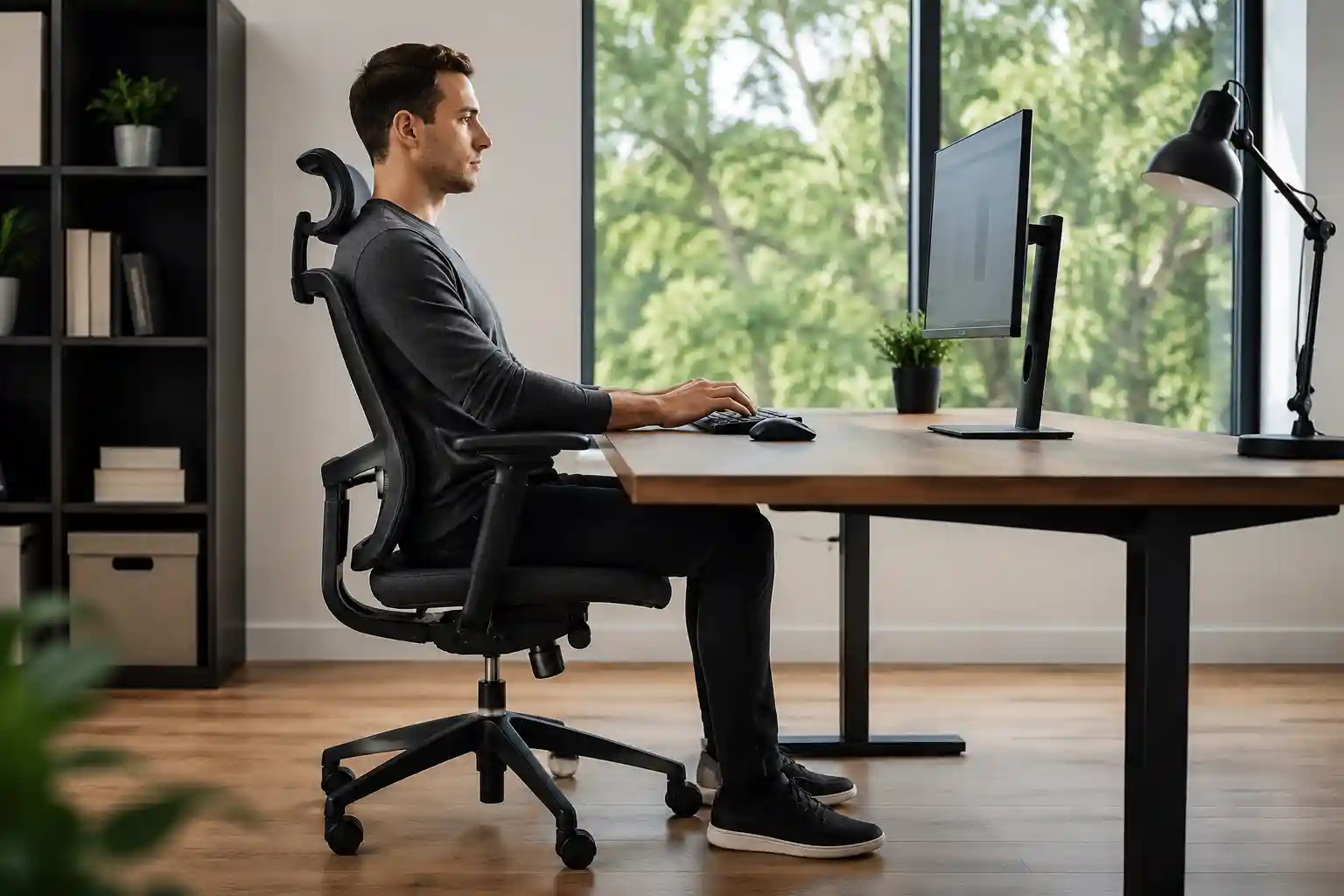
The ideal office chair height allows you to:
- Keep both feet flat on the floor
- Maintain knees at roughly 90–100 degrees
- Keep thighs parallel to the floor
- Sit with hips slightly higher than knees
- Position elbows level with your desk surface
For most adults, office chair seat height falls between 16 and 21 inches from the floor. However, the correct height depends on your body size and desk setup.
If your feet don’t rest comfortably on the floor or your shoulders are lifting while typing, your chair height likely needs adjustment.
Why Office Chair Height Matters
Many people underestimate the importance of proper chair positioning. However, your chair height affects nearly every aspect of workplace ergonomics.
Better Posture
A correctly adjusted chair helps maintain the natural curve of your spine. This reduces slouching and prevents excessive pressure on your lower back.
Improved Back Support
When seated at the proper height, your lumbar support can properly align with your lower spine, helping reduce fatigue and discomfort.
Healthy Blood Circulation
Poor chair height can create pressure behind the knees, restricting blood flow and causing leg numbness or swelling.
Reduced Neck and Shoulder Strain
If your chair is too low, you’ll constantly shrug your shoulders while typing. If it’s too high, you may reach awkwardly toward your keyboard.
Proper height keeps your upper body relaxed.
Increased Productivity
Comfortable employees and remote workers often experience:
- Better focus
- Less fatigue
- Improved concentration
- Greater work efficiency
Small ergonomic improvements can make a significant difference over an entire workday.
Signs Your Office Chair Height Is Wrong
Not sure whether your chair is properly adjusted?
Watch for these common warning signs.
Feet Dangling Above the Floor
If your feet cannot rest flat on the floor, your chair is likely too high.
Pressure Behind Your Knees
A seat that presses against the back of your knees can reduce circulation and create discomfort.
Shoulder Pain
Constant shoulder tension often indicates poor chair-to-desk alignment.
Wrist Discomfort
Improper chair height can force your wrists into awkward positions while typing.
Lower Back Pain
One of the most common signs of poor chair adjustment is persistent lower back pain.
Leaning Forward Frequently
If you constantly lean toward your screen, your chair position may be incorrect.
Related Reading
Still experiencing discomfort during long sitting hours? You may also like our detailed guide on Best Chair for Tailbone Pain While Sitting to discover ergonomic chair options designed for better posture support, pressure relief, and improved comfort.
Step-by-Step Guide to Adjusting Office Chair Height
Proper office chair height adjustment only takes a few minutes.
Step 1 – Sit All the Way Back
Slide your hips completely to the back of the chair.
Your back should make full contact with the backrest, especially the lumbar support area.
Avoid sitting on the edge of the seat.
Step 2 – Place Feet Flat on the Floor
Adjust the chair height until both feet rest comfortably on the floor.
Your weight should be evenly distributed across your feet.
Avoid:
- Tucking feet underneath the chair
- Crossing legs for long periods
- Sitting on tiptoes
Step 3 – Check Knee Angle
Look at your knee position.
Your knees should form an angle between 90 and 100 degrees.
Ideally:
- Knees remain level with hips
- Hips sit slightly higher than knees
This position helps reduce stress on the lower back.
Step 4 – Align Elbows with Desk Height
Rest your arms naturally at your sides.
Your elbows should form approximately a 90-degree angle while typing.
Your shoulders should remain relaxed.
If your desk is too high, raising the chair may require a footrest to maintain proper leg positioning.
Step 5 – Test Your Posture
Perform a quick posture check.
Ask yourself:
- Is my back fully supported?
- Are my feet flat?
- Are my shoulders relaxed?
- Is my neck neutral?
- Are my wrists straight?
If the answer is yes, your chair height is likely correct.
Seat Height vs Seat Depth Explained
Confused about seat height and seat depth? Both play a major role in comfort, posture, and long-term back support. Seat height determines how your feet rest on the floor, while seat depth affects thigh support and circulation. Understanding the difference can help you choose the perfect ergonomic office chair and avoid common sitting mistakes.
Read Complete Guide →Ideal Office Chair Height by User Height
The following table provides general recommendations.
| User Height | Recommended Seat Height |
|---|---|
| 4’10″–5’2″ | 15–17 inches |
| 5’3″–5’6″ | 16–18 inches |
| 5’7″–5’10” | 17–19 inches |
| 5’11″–6’2″ | 18–21 inches |
| 6’3″–6’6″ | 20–22 inches |
Note: These ranges are estimates. Always adjust according to your desk height and body proportions.
Office Chair Height and Desk Height Relationship
Your chair and desk must work together.
Adjusting only the chair often doesn’t solve ergonomic problems.
Standard Desk Height
Most office desks are approximately 28–30 inches high.
This height works well for many adults but isn’t ideal for everyone.
How Chair and Desk Work Together
The goal is simple:
- Elbows stay level with desk surface
- Wrists remain straight
- Shoulders stay relaxed
When chair and desk heights are mismatched, poor posture develops quickly.
When to Use a Footrest
A footrest becomes useful when:
- The desk is too tall
- Raising the chair leaves feet dangling
- You need additional leg support
Footrests can significantly improve comfort during long work sessions.
Best Office Chair Height for Back Pain
People experiencing back pain should pay special attention to chair height.
A poorly adjusted chair places excessive pressure on the lumbar spine.
Focus on Lumbar Support
Choose an ergonomic chair with adjustable lumbar support whenever possible.
The lumbar support should fit naturally into the curve of your lower back.
Maintain a Neutral Spine
A neutral spine means:
- Ears aligned over shoulders
- Shoulders aligned over hips
- Natural spinal curves preserved
This position minimizes stress on muscles and joints.
Reduce Pressure on the Lower Back
When chair height is correct:
- Pelvis remains stable
- Core muscles work efficiently
- Lower back experiences less strain
Many users notice reduced pain within days after correcting their sitting position.
Consider an Ergonomic Chair
If you spend eight or more hours sitting daily, investing in a quality ergonomic office chair can provide:
- Adjustable seat height
- Lumbar support
- Adjustable armrests
- Seat depth adjustment
- Recline functions
These features make achieving the correct office chair height much easier.
Best Stretches for Office Workers (2026 Guide): Reduce Pain & Stay Productive
Even with the perfect office chair height, sitting for long hours can lead to muscle stiffness, lower back pain, neck tension, and reduced productivity. Adding a few simple stretches to your daily routine can improve circulation, reduce discomfort, and help you stay focused throughout the workday.
Our complete guide covers the best stretches for office workers, including neck stretches, shoulder mobility exercises, back pain relief movements, wrist stretches, and desk-friendly routines you can do in just a few minutes.
Read the Complete Stretching Guide →Common Chair Height Mistakes
Even people who understand ergonomics often make these mistakes.
Chair Too Low
A low chair causes:
- Rounded shoulders
- Forward head posture
- Increased neck strain
- Hip discomfort
Chair Too High
A high chair can cause:
- Dangling feet
- Pressure under thighs
- Reduced circulation
- Leg numbness
Using Armrests Incorrectly
Armrests should support your arms lightly.
Avoid:
- Hunching shoulders upward
- Leaning heavily on one side
- Raising armrests excessively
Ignoring Desk Height
Many workers focus only on the chair.
However, chair height and desk height should always be adjusted together.
Sitting in One Position All Day
Even perfect ergonomics cannot replace movement.
Stand, stretch, and walk regularly throughout the day.
Ergonomic Setup Checklist
Use this simple checklist to evaluate your workstation.
Chair Position
✔ Feet flat on floor
✔ Knees at 90–100 degrees
✔ Hips level with or slightly above knees
✔ Back fully supported
✔ Lumbar support aligned with lower back
Desk Position
✔ Elbows at approximately 90 degrees
✔ Shoulders relaxed
✔ Wrists neutral
✔ Keyboard within easy reach
Monitor Position
✔ Screen at eye level
✔ About an arm’s length away
✔ Neck remains neutral
Overall Workstation
✔ No pressure behind knees
✔ Comfortable sitting posture
✔ Easy movement throughout the day
✔ Frequent posture breaks
Frequently Asked Questions
How high should an office chair be from the floor?
Most office chairs should have a seat height between 16 and 21 inches from the floor. The ideal height allows your feet to rest flat while maintaining a 90–100 degree knee angle.
Should knees be higher than hips when sitting?
No. Ideally, your hips should be level with or slightly higher than your knees. This position supports better spinal alignment and reduces lower back strain.
Is it better to sit higher or lower at a desk?
Neither extreme is ideal. The best position keeps elbows level with the desk, feet flat on the floor, and shoulders relaxed.
What if my feet don’t reach the floor?
Use a footrest. Raising your chair to match desk height while supporting your feet helps maintain proper posture and circulation.
Can chair height cause back pain?
Yes. Incorrect chair height can contribute to lower back pain, neck tension, shoulder discomfort, and poor posture. Adjusting your chair properly often provides noticeable relief.
Conclusion
If you’ve been wondering how high should your office chair be, the answer is simple: adjust it so your feet rest flat on the floor, your knees stay at approximately 90–100 degrees, your thighs remain parallel to the floor, and your elbows align comfortably with your desk.
Proper office chair height is one of the most important parts of an ergonomic workstation setup. A few small adjustments can improve posture, reduce back pain, increase circulation, and make long workdays far more comfortable.
Whether you’re working from home, studying, gaming, or spending long hours in an office, taking a few minutes to adjust your chair today can have a major impact on your comfort, health, and productivity in 2026 and beyond.