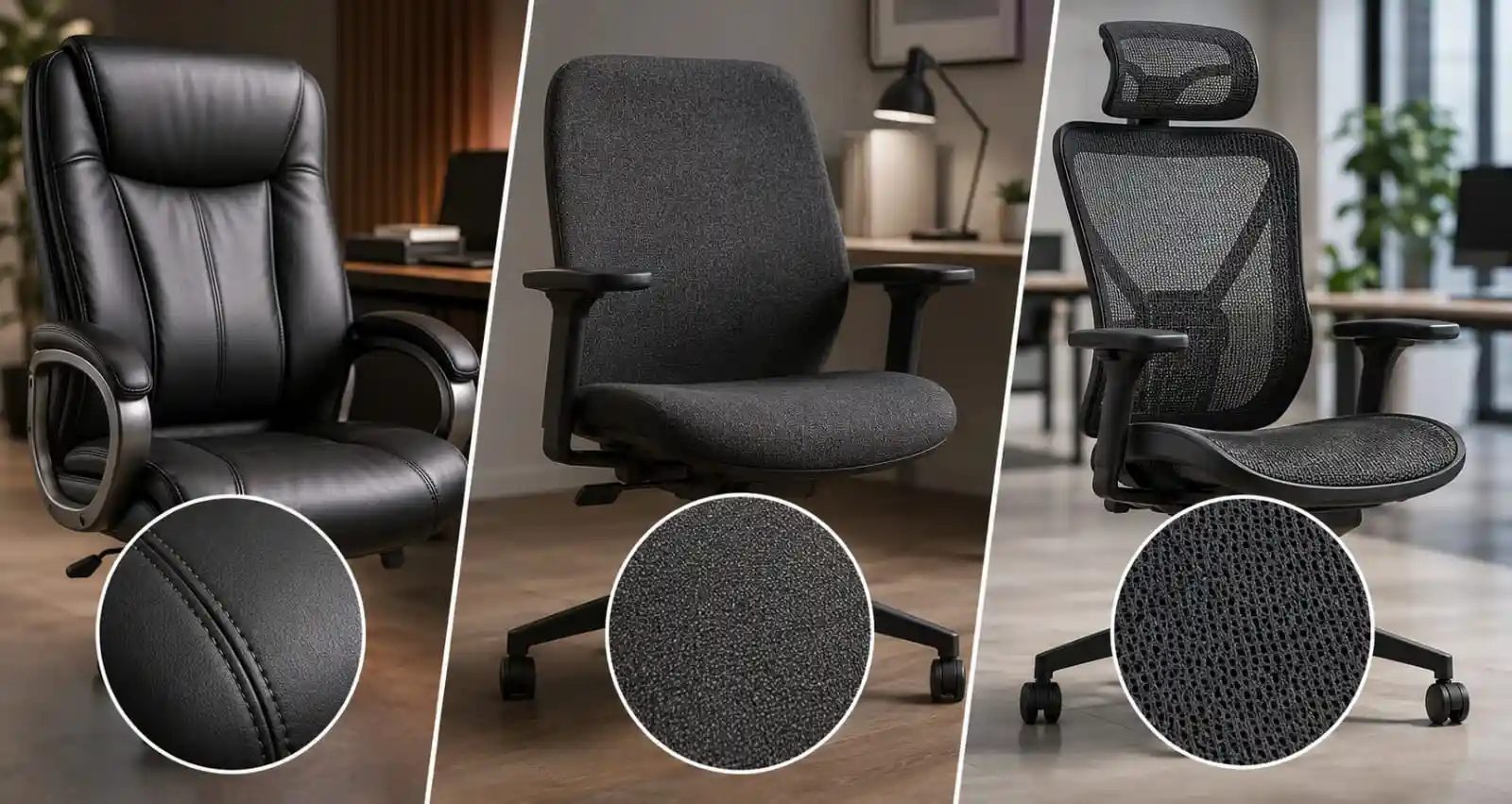
Choosing the right office chair is about much more than style. If you spend six to ten hours sitting every day, the material of your office chair can affect your comfort, posture, body temperature, and even productivity.
Many buyers focus on adjustable armrests, lumbar support, or reclining features while overlooking one of the most important parts of the chair—the upholstery and seat material. A chair made from the wrong material may feel hot during summer, wear out quickly, become difficult to clean, or fail to provide enough support during long work sessions.
Today’s office chairs are available in a wide variety of materials, including breathable mesh, soft fabric, PU leather, genuine leather, vinyl, memory foam cushions, and hybrid combinations. Each option has unique strengths and weaknesses depending on your budget, climate, work environment, and daily sitting habits.
For example, remote workers living in warmer states often prefer breathable mesh office chairs because they stay cool throughout the day. Professionals who want a premium executive look usually choose genuine leather chairs, while budget-conscious buyers often select durable fabric or PU leather models.
In this complete office chair buying guide, you’ll learn:
- How different office chair materials compare
- The advantages and disadvantages of each material
- Which material lasts the longest
- Which material is best for back pain
- Which chair works best in hot weather
- How to choose the perfect office chair material for your needs
By the end of this guide, you’ll know exactly which office chair material offers the best balance of comfort, durability, maintenance, and value in 2026.
Why Office Chair Material Matters
The material covering your office chair plays a major role in how comfortable the chair feels after hours of sitting. Even the most ergonomic design can become uncomfortable if the upholstery traps heat, lacks cushioning, or wears out quickly.
Let’s look at the key factors.
Comfort
Different materials create very different seating experiences.
Mesh naturally adapts to your body while allowing air circulation. Fabric feels soft and cozy, while memory foam provides additional cushioning for pressure relief. Leather offers a smooth premium feel but may become warmer during extended use.
Choosing the right material can reduce fatigue during long workdays.
Breathability
Breathability is especially important if you live in a warm or humid climate.
Mesh chairs allow constant airflow, helping reduce sweat and heat buildup.
Fabric offers moderate ventilation, while leather and vinyl trap more body heat because they have fewer ventilation holes.
If you often feel warm while working, breathable office chair materials should be a priority.
Long-Hour Sitting
People working from home, office professionals, programmers, gamers, and designers often sit for eight or more hours every day.
Materials that distribute pressure evenly help reduce discomfort.
Memory foam cushions combined with breathable mesh backs are among the most comfortable combinations for extended sitting sessions.
Durability
Not all chair materials age the same way.
Premium mesh can maintain its shape for years without sagging.
High-quality fabric resists daily wear but may stain over time.
PU leather can begin peeling after several years, especially with heavy use.
Genuine leather is one of the longest-lasting materials when properly maintained.
The right material can significantly extend the life of your office chair.
Cleaning and Maintenance
Maintenance requirements vary considerably.
Mesh usually requires simple vacuuming and occasional wiping.
Fabric absorbs dust, spills, and pet hair more easily.
Leather wipes clean quickly but needs conditioning to prevent drying and cracking.
Vinyl is among the easiest materials to sanitize, making it common in healthcare and commercial settings.
Appearance
Your office chair contributes to the overall appearance of your workspace.
Executive offices often feature genuine leather chairs because they create a professional, luxurious look.
Mesh chairs deliver a modern minimalist style.
Fabric chairs provide a warm and welcoming appearance.
Hybrid materials combine aesthetics with functionality.
Price
Budget also plays an important role.
Generally, office chair materials fall into these price ranges:
- Mesh: Affordable to premium
- Fabric: Budget to mid-range
- PU Leather: Budget-friendly executive appearance
- Vinyl: Low to mid-range
- Genuine Leather: Premium pricing
- Hybrid Materials: Mid-range to premium
Paying slightly more for higher-quality materials often reduces replacement costs over time.
Ergonomic Support
Material alone doesn’t determine ergonomics, but it works together with cushioning, lumbar support, and frame design.
For example:
- Mesh supports airflow while maintaining tension.
- Memory foam reduces pressure on hips and thighs.
- Fabric provides soft cushioning.
- Leather offers stable support with a luxurious finish.
The best ergonomic office chairs combine quality materials with adjustable support features rather than relying on one factor alone.
Expert Tip: A chair’s adjustability is just as important as its material. Look for adjustable lumbar support, seat depth, armrests, and recline tension to get the most benefit from any upholstery type.
Quick Comparison Table
| Material | Comfort | Breathability | Durability | Cleaning | Price | Best For | Overall Rating |
|---|---|---|---|---|---|---|---|
| Mesh | ⭐⭐⭐⭐⭐ | ⭐⭐⭐⭐⭐ | ⭐⭐⭐⭐☆ | Easy | $$ | Remote workers, hot climates | ⭐⭐⭐⭐⭐ |
| Fabric | ⭐⭐⭐⭐☆ | ⭐⭐⭐⭐☆ | ⭐⭐⭐⭐☆ | Moderate | $$ | Home offices | ⭐⭐⭐⭐☆ |
| PU Leather | ⭐⭐⭐⭐☆ | ⭐⭐☆☆☆ | ⭐⭐⭐☆☆ | Easy | $$ | Budget executive chairs | ⭐⭐⭐⭐☆ |
| Genuine Leather | ⭐⭐⭐⭐⭐ | ⭐⭐☆☆☆ | ⭐⭐⭐⭐⭐ | Moderate | $$$$ | Executive offices | ⭐⭐⭐⭐⭐ |
| Vinyl | ⭐⭐⭐☆☆ | ⭐⭐☆☆☆ | ⭐⭐⭐⭐☆ | Very Easy | $ | Medical and commercial use | ⭐⭐⭐☆☆ |
| Memory Foam Seat | ⭐⭐⭐⭐⭐ | ⭐⭐⭐☆☆ | ⭐⭐⭐⭐☆ | Easy | $$$ | Long working hours | ⭐⭐⭐⭐⭐ |
| Hybrid Materials | ⭐⭐⭐⭐⭐ | ⭐⭐⭐⭐☆ | ⭐⭐⭐⭐⭐ | Moderate | $$$ | Premium ergonomic chairs | ⭐⭐⭐⭐⭐ |
Did You Know? Most premium ergonomic office chairs released in 2026 use two or more materials—such as a mesh back paired with a high-density foam seat—to maximize both comfort and durability.
Mesh Office Chairs
Mesh has become one of the most popular office chair materials over the past decade, especially for ergonomic chairs designed for home offices and remote work.
Instead of traditional upholstery, mesh chairs use a tightly woven synthetic material stretched across the frame. This design allows air to flow freely while providing flexible support.
Advantages
- Excellent airflow keeps you cool during long work sessions.
- Reduces sweat and heat buildup.
- Lightweight and modern appearance.
- Requires minimal maintenance.
- Ideal for long daily sitting.
- Resists dust better than many fabric materials.
- Often found in ergonomic office chairs with adjustable lumbar support.
Because of these advantages, mesh chairs are widely recommended for people who work from home or spend more than eight hours at a desk.
Pros
| Pros |
| Outstanding breathability |
| Modern ergonomic design |
| Lightweight |
| Easy to clean |
| Comfortable in hot weather |
| Supports healthy posture |
Cons
| Cons |
| Can feel firm for some users |
| Lower-quality mesh may sag over time |
| Less luxurious appearance than leather |
| Limited cushioning unless paired with foam |
Best Users
Mesh office chairs are ideal for:
- Remote workers
- Office professionals
- Gamers
- Students
- Programmers
- Graphic designers
- People who sweat easily
- Users living in warm or humid climates
Maintenance Tips
Keeping a mesh chair in good condition is simple:
- Vacuum dust every few weeks.
- Wipe the frame with a damp microfiber cloth.
- Avoid placing the chair in direct sunlight for long periods.
- Tighten screws and inspect the mesh tension annually.
With proper care, a high-quality mesh office chair can remain supportive for many years.
💺 Wondering if a mesh office chair can help reduce back pain? Read our complete expert guide before buying.
👉 Read: Is a Mesh Chair Good for Back Pain?Fabric Office Chairs
Fabric office chairs remain one of the most comfortable and affordable choices for everyday users. Unlike mesh, fabric features padded upholstery over foam cushions, creating a softer and warmer seating experience.
Modern office chair fabrics are available in many textures and colors, making them popular for home offices and collaborative workspaces.
Benefits
Fabric chairs provide:
- Soft cushioning for daily comfort
- Better warmth during colder months
- Wide range of colors and styles
- Quiet, non-slip seating surface
- Good overall value
Many users find fabric more comfortable than leather because it doesn’t feel cold in winter or overly sticky during mild weather.
Drawbacks
While comfortable, fabric has some limitations:
- Absorbs spills and stains more easily.
- Can collect dust, pet hair, and allergens.
- Requires deeper cleaning than mesh or leather.
- May fade after years of direct sunlight exposure.
Comfort
One of the biggest strengths of fabric is its plush feel. Combined with high-density foam, fabric chairs distribute body weight evenly and reduce pressure during long work sessions.
Cleaning
Regular vacuuming helps remove dust and crumbs. Most stains can be treated with a mild upholstery cleaner, though prompt cleaning is important to prevent permanent marks.
Durability
High-quality woven fabrics can last for many years with proper care. Choosing chairs with abrasion-resistant upholstery will improve long-term performance.
Best Users
Fabric office chairs are an excellent choice for:
- Home office workers
- Students
- Everyday office employees
- Budget-conscious buyers
- Users who prioritize soft cushioning over maximum airflow
Expert Tip: If you have pets, choose tightly woven fabric instead of loose-texture upholstery. It resists snagging from claws and is easier to vacuum.
PU Leather Office Chairs
PU (Polyurethane) leather office chairs have become one of the most popular choices for buyers who want the stylish appearance of leather without paying premium prices. You’ll often find PU leather on executive office chairs, gaming chairs, and many budget-friendly ergonomic models.
Unlike genuine leather, PU leather is a synthetic material applied over a fabric base. Modern PU leather has improved significantly in recent years, offering a softer texture and a more realistic leather look than older versions.
For home offices and everyday work, PU leather provides an excellent balance between affordability and appearance.
Advantages of PU Leather Office Chairs
Affordable Executive Style
One of the biggest reasons buyers choose PU leather is its professional appearance. It gives your workspace an executive look at a fraction of the cost of genuine leather.
Easy to Clean
PU leather has a smooth surface that resists minor spills.
Coffee, water, and dust can usually be removed with a soft damp cloth without leaving permanent stains.
This makes it ideal for busy professionals and households with children.
Soft Surface
Most quality PU leather chairs feel smooth and comfortable during normal work sessions.
When paired with high-density foam, they provide excellent seating comfort for several hours.
Water Resistant
Unlike fabric, PU leather doesn’t absorb liquids immediately.
Accidental spills are much less likely to damage the chair if cleaned promptly.
Budget Friendly
Many excellent ergonomic office chairs under $300 use PU leather, making it one of the best materials for buyers looking for value.
Disadvantages of PU Leather
Despite its benefits, PU leather isn’t perfect.
Limited Breathability
PU leather traps body heat more than mesh or fabric.
If you work in a warm room without air conditioning, the chair may become uncomfortable during long sessions.
Peeling Over Time
Lower-quality PU leather may begin peeling or cracking after several years of daily use.
Exposure to sunlight, body oils, and improper cleaning can shorten its lifespan.
Less Durable Than Genuine Leather
Although modern PU leather is much better than older versions, it still doesn’t match the long-term durability of genuine leather.
Maintenance Tips
Proper care can significantly extend the life of a PU leather office chair.
- Wipe the chair weekly with a microfiber cloth.
- Clean spills immediately.
- Avoid harsh chemical cleaners.
- Keep the chair away from direct sunlight.
- Don’t use alcohol-based cleaning products.
- Use a mild soap solution when necessary.
Expert Tip
Never place a PU leather chair directly beside a sunny window. Continuous UV exposure is one of the main causes of peeling and fading.
Expected Lifespan
Average lifespan depends on quality.
| Quality | Expected Life |
|---|---|
| Budget PU Leather | 2–4 years |
| Mid-Range PU Leather | 4–6 years |
| Premium PU Leather | 6–8 years |
Proper maintenance can extend these estimates.
Who Should Buy a PU Leather Office Chair?
PU leather is an excellent option for:
- Home office users
- Students
- Remote workers
- Buyers under a moderate budget
- Anyone who likes an executive-style workspace
- Users who don’t work in extremely hot climates
Pros
| Pros |
|---|
| Affordable |
| Stylish executive appearance |
| Easy to wipe clean |
| Water resistant |
| Comfortable padding |
| Great value for money |
Cons
| Cons |
|---|
| Less breathable |
| Can peel over time |
| Shorter lifespan than genuine leather |
| Can become warm during summer |
Genuine Leather Office Chairs
When people think of premium office furniture, genuine leather is usually the first material that comes to mind.
Found in high-end executive chairs, genuine leather offers unmatched luxury, durability, and professional appearance.
Unlike synthetic leather, genuine leather is made from natural animal hide, giving every chair its own unique texture and character.
Although expensive, many buyers consider it a long-term investment.
Premium Feel
Few materials match the comfort and richness of genuine leather.
As leather ages, it develops a natural patina that enhances its appearance rather than making it look worn.
High-quality executive offices often choose genuine leather because it conveys professionalism and prestige.
Luxury Appearance
A genuine leather office chair instantly upgrades any workspace.
Whether placed in a corporate office or home office, it creates an elegant, timeless aesthetic that synthetic materials rarely match.
Durability
One of leather’s greatest strengths is longevity.
With proper care, a premium leather chair can easily last 10–20 years or longer.
Unlike PU leather, genuine leather usually doesn’t peel.
Instead, it becomes softer over time.
Comfort
Leather naturally conforms slightly to your body over years of use.
Combined with premium foam cushioning, it provides exceptional comfort during extended work sessions.
However, it retains more heat than breathable materials.
Maintenance
Leather requires regular maintenance to preserve its appearance.
Recommended care includes:
- Dust weekly.
- Wipe with a soft cloth.
- Condition leather every 6–12 months.
- Keep away from excessive sunlight.
- Avoid soaking the surface with water.
Proper conditioning prevents drying and cracking.
Cost
Genuine leather chairs typically cost significantly more than other materials.
However, their durability often makes the higher upfront investment worthwhile.
Who Should Buy Genuine Leather?
Ideal for:
- Executives
- Business owners
- Luxury home offices
- Professionals seeking long-term value
- Buyers wanting premium craftsmanship
Pros
| Pros |
|---|
| Extremely durable |
| Luxurious appearance |
| Premium comfort |
| Long lifespan |
| Ages beautifully |
| Excellent resale value |
Cons
| Cons |
|---|
| Expensive |
| Less breathable |
| Requires regular conditioning |
| Heavier than mesh chairs |
Did You Know?
A well-maintained genuine leather office chair can last more than twice as long as many synthetic leather chairs, making it a cost-effective choice over the long term despite the higher purchase price.
Vinyl Office Chairs
Vinyl is another synthetic upholstery material commonly used in commercial environments, healthcare facilities, laboratories, schools, and reception areas.
While vinyl doesn’t offer the premium feel of leather or the breathability of mesh, it excels in durability and hygiene.
Because it has a non-porous surface, vinyl is one of the easiest office chair materials to disinfect.
Advantages
Extremely Easy to Clean
Vinyl resists liquids, stains, and most everyday spills.
This makes it ideal for workplaces where cleanliness is essential.
Water Resistant
Unlike fabric, vinyl won’t absorb moisture.
A quick wipe is usually enough to restore its appearance.
Budget Friendly
Vinyl chairs are generally less expensive than genuine leather and many premium fabric models.
Durable for Commercial Use
Vinyl stands up well to frequent use, making it a practical option for shared workspaces and waiting rooms.
Disadvantages
Despite its practicality, vinyl has several drawbacks.
- Limited breathability
- Can feel sticky during hot weather
- Less comfortable for prolonged sitting
- Doesn’t have the premium appearance of leather
- May stiffen or crack with age if exposed to extreme temperatures
Best Use Cases
Vinyl office chairs work well for:
- Reception desks
- Medical offices
- Clinics
- Schools
- Shared office environments
- Conference rooms
- Short-duration seating
They are less suitable for people working eight or more hours every day.
Cleaning Tips
Maintaining vinyl is simple.
- Wipe daily with a damp microfiber cloth.
- Use mild soap for stubborn dirt.
- Avoid abrasive cleaners.
- Dry the surface after cleaning.
- Keep sharp objects away to prevent punctures.
Pros
| Pros |
|---|
| Very easy to sanitize |
| Water resistant |
| Affordable |
| Durable |
| Good for commercial environments |
Cons
| Cons |
|---|
| Poor airflow |
| Less comfortable for long hours |
| Basic appearance |
| Can feel hot during summer |
Expert Tip
If you work from home for eight or more hours every day, prioritize breathable ergonomic office chair materials such as mesh or hybrid mesh-over-foam designs instead of vinyl. Vinyl is excellent for easy maintenance, but it isn’t the most comfortable option for all-day use.
By understanding the strengths and weaknesses of PU leather, genuine leather, and vinyl, you can narrow your choices based on your budget, work environment, and comfort preferences. The next section will explore memory foam seat cushions, hybrid material office chairs, and detailed material comparisons to help you decide which office chair material truly offers the best overall value in 2026.
Memory Foam Seat Cushions
When discussing office chair materials explained, it’s important to look beyond the upholstery. The seat cushion material plays an equally important role in comfort, especially if you spend eight or more hours sitting each day.
Memory foam has become one of the most popular cushioning materials in ergonomic office chairs because it molds to your body, distributes weight evenly, and reduces pressure on common pain points.
Unlike traditional foam, memory foam responds to body heat and pressure, creating a customized seating experience. This makes it an excellent choice for remote workers, office professionals, gamers, and anyone dealing with lower back or hip discomfort.
Benefits of Memory Foam
Excellent Pressure Relief
One of the biggest advantages of memory foam is its ability to reduce pressure on the hips, thighs, and tailbone.
Instead of creating pressure points, the foam spreads your body weight more evenly, making long work sessions much more comfortable.
Better Comfort for Long Hours
If you regularly sit for six to ten hours, standard foam can gradually compress and become uncomfortable.
High-density memory foam maintains its shape longer and provides consistent support throughout the day.
Supports Better Posture
Although posture mainly depends on chair design, a supportive seat cushion helps keep your pelvis in a more natural position, reducing unnecessary strain on the lower back.
Reduces Fatigue
By minimizing pressure on the legs and hips, memory foam helps improve sitting comfort and may reduce fatigue during extended workdays.
Are There Any Drawbacks?
Like every material, memory foam has a few disadvantages.
- Lower-quality memory foam can lose firmness over time.
- It retains more heat than mesh seating surfaces.
- Premium memory foam chairs usually cost more than standard foam models.
- Very soft foam may not provide enough support for heavier users.
Fortunately, many modern ergonomic chairs combine memory foam with breathable fabric or mesh to improve airflow.
Best Users for Memory Foam Chairs
Memory foam is an excellent choice for:
- Remote workers
- Office professionals
- Gamers
- Students
- Writers
- Programmers
- Graphic designers
- People with mild back pain
- Anyone sitting more than six hours per day
Maintenance Tips
Memory foam itself requires little maintenance, but the seat cover should be cleaned according to the manufacturer’s instructions.
To extend the cushion’s lifespan:
- Vacuum regularly to remove dust.
- Rotate sitting positions throughout the day.
- Avoid placing heavy objects on the seat when not in use.
- Keep the chair away from excessive moisture.
Pros
| Pros |
|---|
| Outstanding comfort |
| Excellent pressure relief |
| Supports long sitting sessions |
| Improves overall seating experience |
| Maintains shape better than cheap foam |
Cons
| Cons |
|---|
| Can retain heat |
| More expensive |
| Quality varies by manufacturer |
| Soft foam may not suit everyone |
Expert Tip: If you experience lower back discomfort, look for a chair that combines a memory foam seat with adjustable lumbar support and a breathable mesh back. This combination offers an excellent balance of comfort and ergonomics.
Did You Know?
Many premium ergonomic office chairs use high-density molded foam instead of traditional memory foam. High-density foam offers slightly firmer support, while memory foam provides a softer, body-contouring feel. The best option depends on your personal comfort preference.
Hybrid Material Office Chairs
Modern ergonomic office chairs rarely rely on a single material. Instead, manufacturers combine different materials to maximize comfort, durability, airflow, and aesthetics.
These are known as hybrid office chairs.
For many buyers, hybrid designs provide the best overall experience because they combine the strengths of multiple materials while minimizing their weaknesses.
What Are Hybrid Office Chairs?
A hybrid chair uses two or more materials in different parts of the chair.
For example:
- Mesh back + fabric seat
- Mesh back + memory foam cushion
- Leather seat + mesh back
- Fabric upholstery + high-density foam
- PU leather + breathable mesh panels
Each combination is designed to improve comfort and performance for specific users.
Mesh Back + Fabric Seat
This is one of the most common combinations found in ergonomic office chairs.
Advantages
- Excellent airflow across the back
- Soft and comfortable seat cushion
- Good balance between breathability and comfort
- Suitable for all-day office work
- Available across a wide range of budgets
Disadvantages
- Fabric seat requires occasional deep cleaning.
- Seat may absorb spills more easily than leather.
Best For:
- Home offices
- Remote workers
- Students
- Professionals
- Everyday office use
Mesh Back + Memory Foam Seat
Many premium ergonomic chairs now use this combination.
The mesh keeps your back cool while the memory foam seat reduces pressure on your hips and thighs.
Advantages
- Outstanding comfort
- Excellent pressure relief
- Superior airflow
- Great for 8–10 hour workdays
- Excellent ergonomic support
Disadvantages
- Higher purchase price
- Slightly heavier chair
Best For:
- Programmers
- Designers
- Gamers
- Professionals
- People with mild back discomfort
Leather Seat + Mesh Back
This combination provides the premium appearance of leather while improving ventilation through the backrest.
Advantages
- Executive appearance
- Better airflow than full leather chairs
- Comfortable during long meetings
- Easier seat cleaning
Disadvantages
- Still warmer than fabric seating
- Premium pricing
Best For:
- Managers
- Executives
- Home office professionals
- Hybrid workspaces
Why Hybrid Chairs Are Becoming More Popular
Manufacturers have realized that no single material is perfect.
For example:
- Mesh provides outstanding airflow but may feel firmer.
- Fabric feels soft but attracts dust.
- Leather looks luxurious but traps heat.
- Memory foam reduces pressure but retains warmth.
Hybrid designs combine the best features of each material while reducing common drawbacks.
Who Should Choose a Hybrid Office Chair?
Hybrid office chairs are ideal for:
- Remote workers
- Professionals working more than eight hours daily
- Buyers wanting premium comfort
- Home office users
- People looking for long-term value
- Buyers who prioritize ergonomics over appearance alone
Pros
| Pros |
|---|
| Excellent comfort |
| Better airflow |
| Balanced support |
| Modern ergonomic design |
| Available in many price ranges |
| Combines strengths of multiple materials |
Cons
| Cons |
|---|
| Often more expensive |
| Cleaning requirements vary by material |
| Quality depends on overall chair construction |
Expert Tip
If your budget allows, choose a hybrid ergonomic office chair with a breathable mesh back, high-density or memory foam seat, and adjustable lumbar support. This combination consistently offers one of the best experiences for long workdays, making it a top recommendation for most home office users in 2026.
Did You Know?
Most premium ergonomic office chairs from leading manufacturers now feature hybrid material construction. This design approach improves airflow, comfort, and durability while addressing common complaints associated with single-material chairs.
Quick Comparison of Popular Hybrid Combinations
| Hybrid Combination | Comfort | Breathability | Durability | Maintenance | Best For |
|---|---|---|---|---|---|
| Mesh + Fabric | ⭐⭐⭐⭐⭐ | ⭐⭐⭐⭐⭐ | ⭐⭐⭐⭐☆ | Moderate | Everyday office work |
| Mesh + Memory Foam | ⭐⭐⭐⭐⭐ | ⭐⭐⭐⭐☆ | ⭐⭐⭐⭐⭐ | Easy | Long working hours |
| Leather + Mesh | ⭐⭐⭐⭐☆ | ⭐⭐⭐⭐☆ | ⭐⭐⭐⭐⭐ | Moderate | Executive offices |
| Fabric + High-Density Foam | ⭐⭐⭐⭐☆ | ⭐⭐⭐⭐☆ | ⭐⭐⭐⭐☆ | Moderate | Home offices |
| PU Leather + Mesh | ⭐⭐⭐⭐☆ | ⭐⭐⭐⭐☆ | ⭐⭐⭐⭐☆ | Easy | Budget ergonomic chairs |
Overall, hybrid office chairs deliver one of the best combinations of comfort, support, and practicality. By blending multiple materials, they address the weaknesses of traditional designs and are an excellent choice for buyers seeking long-term value.
Material Comparison: Which Office Chair Material Is Right for You?
Choosing the right office chair material can be difficult because each option offers different advantages. Some materials focus on breathability, while others prioritize durability, luxury, or affordability.
The comparisons below will help you decide which material best suits your workspace, budget, and daily sitting habits.
Mesh vs Fabric Office Chair
Mesh and fabric are two of the most popular materials for ergonomic office chairs. While both provide comfortable seating, they perform differently in areas like airflow, maintenance, and support.
| Feature | Mesh | Fabric |
|---|---|---|
| Comfort | ⭐⭐⭐⭐☆ | ⭐⭐⭐⭐⭐ |
| Breathability | ⭐⭐⭐⭐⭐ | ⭐⭐⭐⭐☆ |
| Cleaning | Easy | Moderate |
| Heat Retention | Very Low | Moderate |
| Durability | High | High |
| Price | $$–$$$ | $–$$$ |
Choose Mesh If You:
- Work in a warm or humid climate
- Sweat easily while sitting
- Spend long hours at your desk
- Prefer a modern ergonomic design
- Want minimal maintenance
Choose Fabric If You:
- Prefer a softer seat
- Live in a cooler climate
- Want more color and style options
- Have a limited budget
- Value plush comfort
Expert Recommendation
For most remote workers, a mesh back with a fabric or foam seat offers the best balance between comfort and breathability.
Mesh vs Leather Office Chair
This is one of the most common comparisons among office chair buyers.
Mesh focuses on airflow and ergonomics, while leather emphasizes luxury and executive styling.
| Feature | Mesh | Leather |
|---|---|---|
| Airflow | ⭐⭐⭐⭐⭐ | ⭐⭐☆☆☆ |
| Luxury Appearance | ⭐⭐⭐☆☆ | ⭐⭐⭐⭐⭐ |
| Long Sitting Comfort | ⭐⭐⭐⭐⭐ | ⭐⭐⭐⭐☆ |
| Cleaning | Easy | Easy |
| Maintenance | Low | Moderate |
| Cost | $$ | $$$$ |
Mesh Is Better For
- Remote workers
- Gamers
- Programmers
- Students
- Home offices
- Hot climates
Leather Is Better For
- Executives
- Business owners
- Conference rooms
- Luxury offices
- Buyers wanting premium aesthetics
Verdict
If comfort during long workdays is your priority, mesh is usually the better option.
If appearance and prestige matter more, genuine leather is difficult to beat.
PU Leather vs Genuine Leather
Many buyers struggle to decide whether genuine leather is worth the additional cost.
Here’s how they compare.
| Feature | PU Leather | Genuine Leather |
|---|---|---|
| Price | $$ | $$$$ |
| Appearance | Very Good | Excellent |
| Durability | Medium | Excellent |
| Breathability | Moderate | Moderate |
| Maintenance | Easy | Moderate |
| Lifespan | 4–8 Years | 10–20+ Years |
PU Leather Advantages
- Affordable
- Executive appearance
- Easy to clean
- Water resistant
- Great value
Genuine Leather Advantages
- Long-lasting
- Premium craftsmanship
- Luxurious feel
- Ages beautifully
- Better long-term investment
Verdict
Choose PU leather if you’re shopping on a moderate budget.
Choose genuine leather if you’re looking for a chair that can last well over a decade with proper care.
Fabric vs Leather Office Chair
These materials appeal to different types of buyers.
Fabric focuses on everyday comfort, while leather provides a premium executive experience.
| Feature | Fabric | Leather |
|---|---|---|
| Softness | ⭐⭐⭐⭐⭐ | ⭐⭐⭐⭐☆ |
| Breathability | ⭐⭐⭐⭐☆ | ⭐⭐☆☆☆ |
| Luxury | ⭐⭐⭐☆☆ | ⭐⭐⭐⭐⭐ |
| Cleaning | Moderate | Easy |
| Maintenance | Moderate | Moderate |
| Cost | $$ | $$$$ |
Fabric Works Best For
- Home offices
- Students
- Everyday work
- Budget-conscious buyers
- Casual workspaces
Leather Works Best For
- Executive offices
- Professional environments
- Luxury home offices
- Long-term investment
Verdict
Fabric is the better choice for comfort and value.
Leather wins in durability, prestige, and premium appearance.
Hybrid vs Traditional Materials
Modern ergonomic chairs increasingly use hybrid construction rather than relying on a single material.
Examples include:
- Mesh back + foam seat
- Mesh back + fabric seat
- Leather seat + mesh back
- Fabric + high-density foam
| Feature | Hybrid Materials | Traditional Single Material |
|---|---|---|
| Comfort | ⭐⭐⭐⭐⭐ | ⭐⭐⭐⭐☆ |
| Breathability | ⭐⭐⭐⭐⭐ | Varies |
| Durability | ⭐⭐⭐⭐⭐ | Varies |
| Ergonomics | Excellent | Good |
| Value | Excellent | Good |
Why Hybrid Chairs Are Better
Hybrid designs combine the strengths of multiple materials while minimizing common weaknesses.
For example:
- Mesh keeps your back cool.
- Foam reduces pressure.
- Fabric improves comfort.
- Leather enhances appearance.
This balanced approach makes hybrid chairs one of the best choices for modern offices.
Verdict
If your budget allows, hybrid ergonomic office chairs generally provide the best overall experience for most users.
Overall Material Comparison Table
| Material | Comfort | Breathability | Durability | Maintenance | Best For |
|---|---|---|---|---|---|
| Mesh | ⭐⭐⭐⭐⭐ | ⭐⭐⭐⭐⭐ | ⭐⭐⭐⭐☆ | Easy | Hot climates, remote work |
| Fabric | ⭐⭐⭐⭐☆ | ⭐⭐⭐⭐☆ | ⭐⭐⭐⭐☆ | Moderate | Home offices |
| PU Leather | ⭐⭐⭐⭐☆ | ⭐⭐☆☆☆ | ⭐⭐⭐☆☆ | Easy | Budget executive chairs |
| Genuine Leather | ⭐⭐⭐⭐⭐ | ⭐⭐☆☆☆ | ⭐⭐⭐⭐⭐ | Moderate | Premium offices |
| Vinyl | ⭐⭐⭐☆☆ | ⭐⭐☆☆☆ | ⭐⭐⭐⭐☆ | Very Easy | Commercial spaces |
| Memory Foam | ⭐⭐⭐⭐⭐ | ⭐⭐⭐☆☆ | ⭐⭐⭐⭐☆ | Easy | Long work sessions |
| Hybrid Materials | ⭐⭐⭐⭐⭐ | ⭐⭐⭐⭐☆ | ⭐⭐⭐⭐⭐ | Moderate | Most users |
Expert Recommendation
Best Overall: Hybrid Mesh + Memory Foam
Best Budget: Fabric Office Chair
Best for Hot Weather: Mesh Office Chair
Best Premium Choice: Genuine Leather Office Chair
Best for Long Hours: Mesh Back + Memory Foam Seat
Best Value for Money: Mesh Back + Fabric Seat
Did You Know?
Many of the highest-rated ergonomic office chairs in 2026 combine three materials—a breathable mesh back, a high-density foam seat, and durable fabric upholstery. This combination offers excellent airflow, lasting comfort, and strong durability without the high cost of full leather construction.
By comparing materials side by side, it becomes clear that there isn’t a single “perfect” option for everyone. The best office chair material depends on your work environment, budget, climate, and how many hours you spend sitting each day. For most people, hybrid ergonomic chairs provide the best balance of comfort, support, breathability, and long-term value.
Which Material Is Best for Back Pain?
If you experience lower back pain, hip discomfort, or stiffness after sitting for long hours, the right office chair material can make a noticeable difference. While ergonomic features like adjustable lumbar support, seat height, and recline are essential, the chair’s material also plays an important role in comfort and pressure distribution.
1. Lumbar Support
No chair material alone can prevent back pain, but certain materials work better with ergonomic designs.
- Mesh backs flex naturally while supporting the spine and promoting airflow.
- Memory foam seats distribute body weight evenly and reduce pressure on the hips and tailbone.
- High-density foam provides firmer support for users who prefer a stable sitting surface.
For most people, a mesh back combined with a memory foam or high-density foam seat offers the best balance of support and comfort.
2. Pressure Relief
Long hours of sitting create pressure on the pelvis and lower spine.
Memory foam cushions help by:
- Reducing pressure points
- Improving weight distribution
- Supporting natural posture
- Increasing comfort during extended work sessions
This makes memory foam one of the best seat materials for office workers and remote professionals.
3. Breathability
Heat buildup often causes discomfort, making it harder to maintain good posture.
Breathable mesh office chairs improve airflow, helping you stay cool and comfortable throughout the day. Less sweating means fewer distractions and better overall sitting comfort.
4. Long-Hour Sitting
For users who sit more than eight hours a day, look for these combinations:
- Mesh back + Memory foam seat ⭐⭐⭐⭐⭐
- Mesh back + High-density foam seat ⭐⭐⭐⭐⭐
- Fabric + High-density foam ⭐⭐⭐⭐☆
- Genuine leather + Premium foam ⭐⭐⭐⭐☆
- PU leather + Standard foam ⭐⭐⭐☆☆
Best Recommendation for Back Pain
Best Overall: Mesh Back + Memory Foam Seat + Adjustable Lumbar Support
This combination provides:
- Excellent airflow
- Pressure relief
- Consistent support
- Reduced fatigue
- Better posture during long workdays
Expert Tip: Even the best office chair material cannot replace proper ergonomics. Adjust your chair so your feet rest flat on the floor, your knees are at a 90-degree angle, and the lumbar support fits the natural curve of your lower back.
Did You Know?
Many physical therapists recommend taking a short standing or walking break every 30–60 minutes. Regular movement can be just as important as choosing the right ergonomic chair.
Which Material Is Best for Hot Weather?
If you live in a warm or humid climate, chair breathability becomes one of the most important buying factors.
Poor airflow can lead to sweating, discomfort, and frequent posture adjustments throughout the day.
Airflow Comparison
| Material | Airflow | Heat Retention |
|---|---|---|
| Mesh | ⭐⭐⭐⭐⭐ | Very Low |
| Fabric | ⭐⭐⭐⭐☆ | Moderate |
| Hybrid Mesh | ⭐⭐⭐⭐⭐ | Low |
| PU Leather | ⭐⭐☆☆☆ | High |
| Genuine Leather | ⭐⭐☆☆☆ | High |
| Vinyl | ⭐⭐☆☆☆ | High |
Best Materials for Hot Weather
1. Mesh
Mesh remains the top choice because it allows continuous airflow through the backrest.
2. Hybrid Mesh Chairs
Mesh paired with a fabric or memory foam seat offers a comfortable balance of cooling and cushioning.
3. Fabric
Fabric breathes better than leather but retains more warmth than mesh.
Materials to Avoid in Hot Climates
- Full PU leather chairs
- Full genuine leather chairs
- Vinyl chairs without ventilation
These materials tend to trap body heat during long sitting sessions.
Expert Tip: If your workspace gets warm in the afternoon, choose a breathable mesh chair with an open-back design instead of a fully upholstered chair.
Which Material Lasts the Longest?
Durability depends on material quality, daily use, and maintenance.
Expected Lifespan Comparison
| Material | Average Lifespan |
|---|---|
| Genuine Leather | 10–20+ years |
| Hybrid Materials | 8–15 years |
| Mesh | 7–12 years |
| High-Quality Fabric | 6–10 years |
| Memory Foam Cushion | 5–8 years |
| PU Leather | 4–8 years |
| Vinyl | 4–7 years |
Warranty Matters
A longer warranty often reflects better construction quality.
Look for:
- 5–12 year warranties on premium ergonomic chairs
- Strong steel or aluminum frames
- Replaceable casters and gas lift cylinders
Maintenance Tips
To extend your chair’s lifespan:
- Clean regularly.
- Tighten screws every few months.
- Avoid direct sunlight.
- Follow the manufacturer’s care instructions.
- Use appropriate cleaning products for the material.
Did You Know? Premium office chairs often last significantly longer because manufacturers design many components—such as armrests, casters, and gas lifts—to be replaceable rather than disposable.
Complete Office Chair Buying Guide
Before purchasing a new office chair, consider these important factors.
Room Temperature
- Hot climate → Mesh
- Moderate climate → Fabric
- Air-conditioned office → Leather or Hybrid
Daily Sitting Hours
| Sitting Time | Recommended Material |
|---|---|
| Under 4 Hours | Fabric or PU Leather |
| 4–8 Hours | Mesh or Fabric |
| 8+ Hours | Mesh + Memory Foam or Hybrid |
Budget
- Under $200 → Fabric or Mesh
- $200–$500 → Premium Mesh or Hybrid
- $500+ → High-End Hybrid or Genuine Leather
Body Weight
Heavier users should look for:
- High-density foam
- Reinforced frames
- Higher weight capacity
- Durable upholstery
Cleaning Requirements
Choose:
- Mesh for low maintenance
- Leather for easy wipe-clean surfaces
- Vinyl for commercial environments
- Fabric if softness is your priority
Pets and Kids
If you have pets or young children:
- Choose stain-resistant fabrics or mesh.
- Avoid light-colored upholstery if spills are common.
- Trim pet nails to reduce wear on fabric surfaces.
Office Aesthetics
- Executive office → Genuine leather
- Modern workspace → Mesh
- Cozy home office → Fabric
- Professional hybrid office → Mesh + Fabric or Mesh + Foam
Warranty
Always compare warranty coverage before buying.
Longer warranties often indicate higher build quality and better manufacturer confidence.
Adjustability
Prioritize chairs with:
- Adjustable lumbar support
- Seat height adjustment
- Adjustable armrests
- Recline tension
- Seat depth adjustment
- Headrest (if needed)
Buying Checklist
Use this checklist before making your purchase:
- ☐ Comfortable seat cushion
- ☐ Breathable material
- ☐ Adjustable lumbar support
- ☐ Adjustable armrests
- ☐ Smooth recline function
- ☐ Durable frame
- ☐ Good warranty
- ☐ Suitable weight capacity
- ☐ Easy-to-clean upholstery
- ☐ Fits your budget
- ☐ Matches your workspace style
Expert Tip: Never choose an office chair based only on appearance. Comfort, adjustability, and material quality will have a much greater impact on your daily work experience.
Common Mistakes Buyers Make
Choosing the wrong office chair can lead to discomfort, poor posture, and unnecessary replacement costs. Avoid these common mistakes.
1. Buying Only Based on Looks
A stylish chair may not provide the ergonomic support you need. Always prioritize comfort and adjustability.
2. Ignoring Breathability
Leather and vinyl can become uncomfortable in warm environments. Consider mesh if you tend to get hot while working.
3. Choosing Cheap Synthetic Leather
Low-quality PU leather may peel or crack after only a few years. Invest in better materials when possible.
4. Ignoring the Warranty
A longer warranty often reflects better overall construction quality.
5. Overlooking Adjustability
A chair that cannot be adjusted to fit your body may cause discomfort, even if it uses premium materials.
6. Buying the Wrong Size
Make sure the chair’s dimensions match your height and build. Seat width and depth matter just as much as seat height.
7. Forgetting Weight Capacity
Always check the manufacturer’s recommended weight limit to ensure long-term durability and safe use.
8. Skipping User Reviews
Read verified customer reviews to learn how the chair performs after months or years of daily use.
Frequently Asked Questions (FAQs)
1. Which office chair material lasts the longest?
Genuine leather is generally the longest-lasting office chair material. With proper care and regular conditioning, a high-quality leather chair can last 10–20 years or more. Hybrid ergonomic chairs with durable mesh and high-density foam also offer excellent longevity.
2. Is a mesh office chair better than a leather office chair?
It depends on your needs.
- Mesh office chairs are better for breathability, long working hours, and hot climates.
- Leather office chairs provide a premium appearance, exceptional durability, and a luxurious feel.
For most home office users, mesh is the more practical choice.
3. Which office chair material is easiest to clean?
Vinyl and leather are the easiest materials to clean because spills can usually be wiped away with a damp cloth. Mesh is also relatively low maintenance, while fabric requires more frequent vacuuming and stain removal.
4. Which material is best for hot weather?
Mesh is the best office chair material for warm and humid climates. Its open-weave design promotes continuous airflow, helping reduce heat buildup and sweat during long work sessions.
5. Do PU leather office chairs peel?
Yes, low-quality PU leather may peel or crack over time, especially if exposed to direct sunlight, body oils, or harsh cleaning products. Choosing a higher-quality PU leather chair and following proper maintenance practices can significantly extend its lifespan.
6. Are fabric office chairs good for back pain?
Fabric itself doesn’t relieve back pain, but a fabric chair with high-density foam cushioning, adjustable lumbar support, and proper ergonomics can provide excellent comfort for long hours of sitting.
7. Which office chair material is best for home offices?
For most home offices, a hybrid chair with a breathable mesh back and a memory foam or high-density foam seat offers the best balance of comfort, airflow, durability, and value.
8. Is a mesh chair comfortable for long hours?
Yes. High-quality mesh chairs are designed for extended sitting. When paired with ergonomic features such as lumbar support, adjustable armrests, and a supportive seat cushion, they are among the best options for full-time office work.
Final Verdict
Choosing the best office chair material depends on how you work, where you work, and how long you sit each day.
If your priority is staying cool during long work sessions, mesh remains the top recommendation thanks to its outstanding breathability and ergonomic support.
If you want a softer seating experience, fabric offers excellent comfort and affordability.
Buyers looking for a premium executive appearance will appreciate the elegance and long lifespan of genuine leather, while PU leather provides a similar look at a more budget-friendly price.
For most people, however, hybrid office chairs deliver the best overall experience. By combining breathable mesh, supportive foam, and durable upholstery, they offer an ideal balance of comfort, support, airflow, and longevity.
Our Top Recommendations
🏆 Best Overall Material: Hybrid Mesh + Memory Foam
💰 Best Budget Material: Fabric
👔 Best Premium Material: Genuine Leather
🌡️ Best for Hot Climate: Mesh
🕒 Best for Long Working Hours: Mesh Back + Memory Foam Seat
⭐ Best Value for Money: Mesh Back + Fabric Seat
No single material is perfect for everyone, but choosing the right combination for your workspace and daily routine will help you stay comfortable, productive, and supported for years to come.
Ready to Choose Your Next Office Chair?
Now that you understand the strengths and weaknesses of every office chair material, you’re in a much better position to choose the right chair for your needs.
If you’re still comparing options, explore our detailed buying guides and product reviews to find ergonomic office chairs that match your budget, workspace, and sitting habits. Whether you’re looking for the best mesh office chair, a premium executive leather chair, or an affordable ergonomic model for your home office, selecting the right material is the first step toward healthier and more comfortable sitting.
Final Expert Tips
Expert Tip #1: Test a chair for at least 15–20 minutes whenever possible. Comfort can change after extended sitting.
Expert Tip #2: Prioritize ergonomic adjustments over appearance. Adjustable lumbar support, seat depth, and armrests often have a greater impact on comfort than upholstery alone.
Expert Tip #3: Match the chair material to your environment. Mesh excels in warm climates, while leather is better suited to climate-controlled offices.
Expert Tip #4: Consider the total cost of ownership. A higher-quality chair with durable materials and a long warranty may provide better value than replacing a cheaper chair every few years.
Expert Tip #5: Regular cleaning and maintenance can significantly extend the life of any office chair, regardless of its material.
Conclusion
Understanding office chair materials is the key to making a smarter buying decision. By comparing comfort, breathability, durability, maintenance, and cost, you can confidently choose a chair that fits your lifestyle and supports your health. Invest in quality materials, pair them with ergonomic features, and you’ll enjoy a more productive and comfortable workspace for years to come.